Weight: 211.8
Yesterday I did more gardening. I took my daughters up to my buddy's place and we put in three rows of peppers. We've only planted about 1/4 of the garden at this point. Going up again to plant more tonight (if it doesn't rain) and it's supposed to rain tomorrow. I want to get as much seed into the ground before it rains as possible. It's also supposed ot rain this weekend, so I want to get the whole garden in place before the rains come, so the seeds can be well watered and nurtured in in the soil with warm sun and rain water.
I've been working in my garden almost every day since Thursday.
I'm sore as heck! LOL Planting is not done, but the ground is prepared.
I feel more alive than I've ever felt before. My wife and kids keep asking me, "Who are you and what'd you do with dadda?" They've never seen me this active and this driven to do hard physical work. My buddy whose land I'm using has even said that he's never seen me work this hard before.
While I was in a "down time" stage when he was tilling his garden and I was waiting for him to till mine, I was cutting down weeds on the perimeter of the garden, tending a fire, dragging branches around, sawing down small trees, walking his garden and mine to remove rocks, breaking up large dirt clods by hand, etc. He said he expected me to work a little and then stop when I realized how hard it was--but I was doing all the work *and* extra stuff. He said it really surprised him.
I just find that while I'm working, I want to work more. And when I sit, I want to sit more. So, I keep myself moving and try to pace myself to keep the energy flowing and steady without doing too much.
I'm super-stressed right now--but working in the garden has really helped.
My truck's clutch went out. My wife's Suburban needed new tires and an alignment. My daughter's Corolla was all we had for a few days to get a family of 8 around. Our washing machine went out (won't be repaired till Friday). We're in the middle of a remodel to get rid of the carpeting in our house in an effort to eliminate places where mold can hide to help with my wife's candida infection. Normal work stress. Education stress with the kids. Friends who are going through heartaches and leaning on us for support.
Every area of my life is stressed out right now. The gardening and fresh air and achieving goals with future rewards is really helping! So is the sauna and hot-tub at the Rec Plex, when I have time to get to it...
For dinner last night, I made my wife her favorite food, modified to work with her diet and mine.
She loves Betty Crocker Tuna Spaghetti (look it up online). I made it with "spiralized" yellow squash (they came out like noodles). We steamed them. Probably would've been more "noodle-like" if we'd boiled them...
I also steamed some broccoli, onions and the leftover bits of yellow squash.
It was a hit, even if it wasn't exactly as she remembered it. :)
Tuesday, April 24, 2012

Monday, April 23, 2012
Busy Garden Weekend
Weight: 213.0
The uptick is due to eating this weekend and food in my system. Before I went to bed last night I made myself some eggs, sausage and veggies. I was looking at the upcoming week of no food and decided to go ahead and eat. I wish I'd just gone to bed. It sat like a lump in my gullet all night and I'm burping and gassy this morning because of it.
It was a hard weekend of gardening work. Here are some pictures:
More pictures...
Treated the soil with compost on Saturday. Tilled it several more times on Sunday. Planted the first few rows (mostly tomatoes).
Pictures of the garden with the compost spread around:
http://img.photobucket.com/albums/v420/BenjaminRogers/IMAG1003.jpg
http://img.photobucket.com/albums/v420/BenjaminRogers/IMAG1004.jpg
http://img.photobucket.com/albums/v420/BenjaminRogers/IMAG1005.jpg
http://img.photobucket.com/albums/v420/BenjaminRogers/IMAG1006.jpg
http://img.photobucket.com/albums/v420/BenjaminRogers/IMAG1007.jpg
http://img.photobucket.com/albums/v420/BenjaminRogers/IMAG1008.jpg
http://img.photobucket.com/albums/v420/BenjaminRogers/IMAG1009.jpg
http://img.photobucket.com/albums/v420/BenjaminRogers/IMAG1010.jpg
http://img.photobucket.com/albums/v420/BenjaminRogers/IMAG1016.jpg
http://img.photobucket.com/albums/v420/BenjaminRogers/IMAG1017.jpg
It took two pickup loads of compost and you can see how much compost residue is still left in my truck, even after using a tarp under it. After the garden is in place, I'll really need to clean my truck!
http://img.photobucket.com/albums/v420/BenjaminRogers/IMAG1011.jpg
This is the tiller we used, attached to the back of the tractor. It was too big for my truck when I picked it up and I had to drive it home riding on my tailgate.
http://img.photobucket.com/albums/v420/BenjaminRogers/IMAG1018.jpg
My helpers. Naomi (11) on left and Benjer (8) on right.
http://img.photobucket.com/albums/v420/BenjaminRogers/IMAG1019.jpg
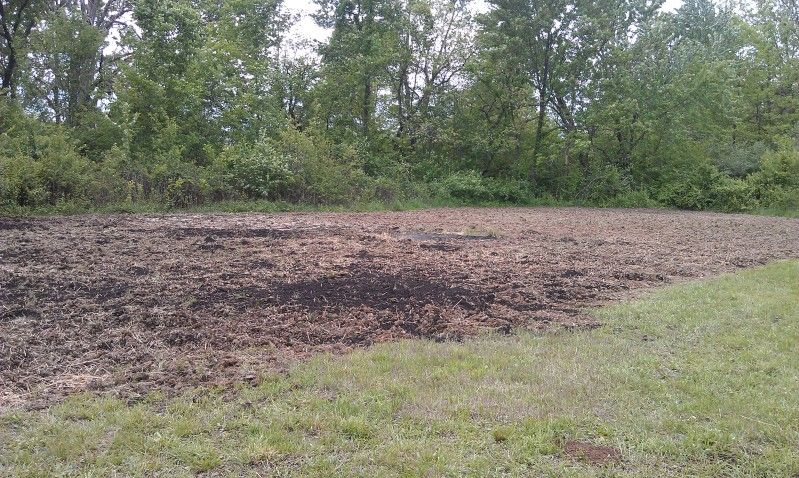
Untreated soil, tilled several times. Notice that it's still full of dirt clods. That's Missouri clay soil for you.
http://img.photobucket.com/albums/v420/BenjaminRogers/IMAG1021.jpg
Treated with some peat moss and chicken coop bedding. It's been tilled once or twice more at this point. Clods are smaller.
http://img.photobucket.com/albums/v420/BenjaminRogers/IMAG1022.jpg
Added compost and tilled it a little more. Still not quite where I'd like to see it (fine clods or powdery) -- but plantable with some potting soil in with the seeds / seedlings.
http://img.photobucket.com/albums/v420/BenjaminRogers/IMAG1023.jpg
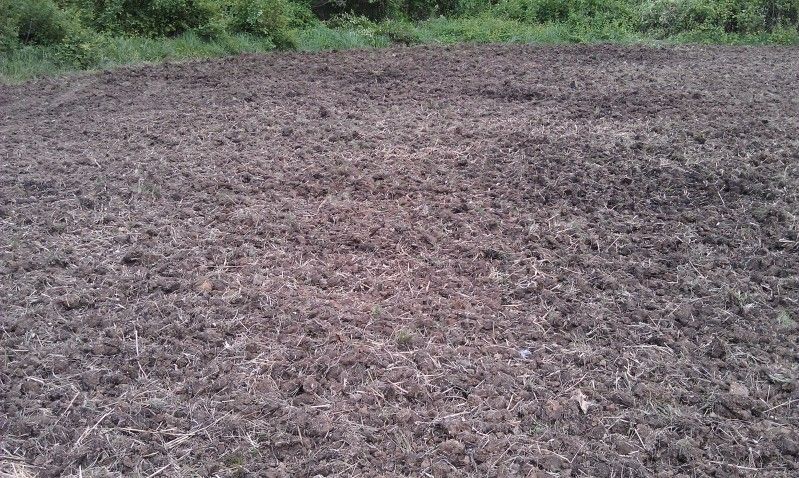
Wider view of the garden after the compost had been tilled in:
http://img.photobucket.com/albums/v420/BenjaminRogers/IMAG1024.jpg
http://img.photobucket.com/albums/v420/BenjaminRogers/IMAG1025.jpg
http://img.photobucket.com/albums/v420/BenjaminRogers/IMAG1033.jpg
http://img.photobucket.com/albums/v420/BenjaminRogers/IMAG1034.jpg
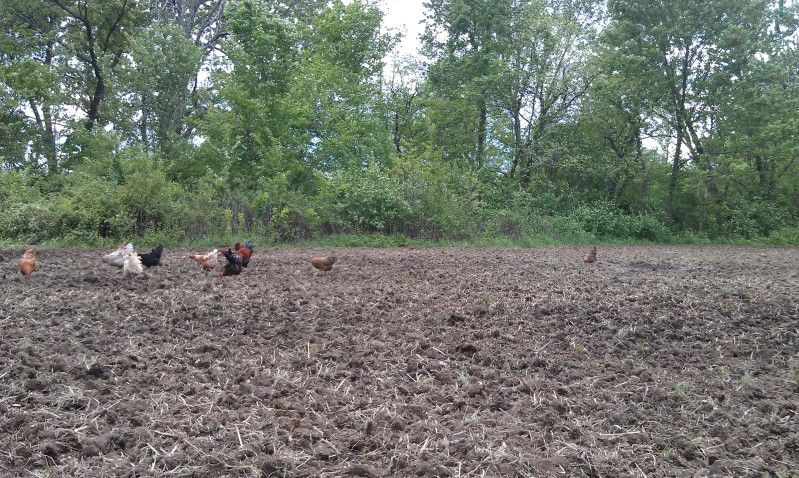
Chickens came out to scratch for food (worms, root tubers, bugs, etc.) They also drop some fresh fertilizer as they feed. (Yes, they are free-range chickens.) We'll probably need to get a fence around the garden to protect the seedlings in the near future.
http://img.photobucket.com/albums/v420/BenjaminRogers/IMAG1026.jpg
http://img.photobucket.com/albums/v420/BenjaminRogers/IMAG1027.jpg
http://img.photobucket.com/albums/v420/BenjaminRogers/IMAG1028.jpg
http://img.photobucket.com/albums/v420/BenjaminRogers/IMAG1029.jpg
http://img.photobucket.com/albums/v420/BenjaminRogers/IMAG1030.jpg
http://img.photobucket.com/albums/v420/BenjaminRogers/IMAG1031.jpg
Naomi looking at one of the clods held together with grass roots. I gave the kiddos instructions, "Break up the big clods held together with grass roots and show the roots to the sun." The soil was wet clay in that portion of the garden. (Rene'e -- 14 -- visible in the background.)
http://img.photobucket.com/albums/v420/BenjaminRogers/IMAG1032.jpg
http://img.photobucket.com/albums/v420/BenjaminRogers/IMAG1035.jpg
Reverse view of the garden, with my buddy's chicken coops visible in the background.
http://img.photobucket.com/albums/v420/BenjaminRogers/IMAG1036.jpg
Three planted rows. Four different kinds of tomatoes, intermixed with basil and lettuce.
http://img.photobucket.com/albums/v420/BenjaminRogers/IMAG1037.jpg
The uptick is due to eating this weekend and food in my system. Before I went to bed last night I made myself some eggs, sausage and veggies. I was looking at the upcoming week of no food and decided to go ahead and eat. I wish I'd just gone to bed. It sat like a lump in my gullet all night and I'm burping and gassy this morning because of it.
It was a hard weekend of gardening work. Here are some pictures:
More pictures...
Treated the soil with compost on Saturday. Tilled it several more times on Sunday. Planted the first few rows (mostly tomatoes).
Pictures of the garden with the compost spread around:
http://img.photobucket.com/albums/v420/BenjaminRogers/IMAG1003.jpg

http://img.photobucket.com/albums/v420/BenjaminRogers/IMAG1004.jpg

http://img.photobucket.com/albums/v420/BenjaminRogers/IMAG1005.jpg

http://img.photobucket.com/albums/v420/BenjaminRogers/IMAG1006.jpg

http://img.photobucket.com/albums/v420/BenjaminRogers/IMAG1007.jpg

http://img.photobucket.com/albums/v420/BenjaminRogers/IMAG1008.jpg

http://img.photobucket.com/albums/v420/BenjaminRogers/IMAG1009.jpg

http://img.photobucket.com/albums/v420/BenjaminRogers/IMAG1010.jpg

http://img.photobucket.com/albums/v420/BenjaminRogers/IMAG1016.jpg

http://img.photobucket.com/albums/v420/BenjaminRogers/IMAG1017.jpg
It took two pickup loads of compost and you can see how much compost residue is still left in my truck, even after using a tarp under it. After the garden is in place, I'll really need to clean my truck!
http://img.photobucket.com/albums/v420/BenjaminRogers/IMAG1011.jpg

This is the tiller we used, attached to the back of the tractor. It was too big for my truck when I picked it up and I had to drive it home riding on my tailgate.
http://img.photobucket.com/albums/v420/BenjaminRogers/IMAG1018.jpg

My helpers. Naomi (11) on left and Benjer (8) on right.
http://img.photobucket.com/albums/v420/BenjaminRogers/IMAG1019.jpg

Untreated soil, tilled several times. Notice that it's still full of dirt clods. That's Missouri clay soil for you.
http://img.photobucket.com/albums/v420/BenjaminRogers/IMAG1021.jpg

Treated with some peat moss and chicken coop bedding. It's been tilled once or twice more at this point. Clods are smaller.
http://img.photobucket.com/albums/v420/BenjaminRogers/IMAG1022.jpg

Added compost and tilled it a little more. Still not quite where I'd like to see it (fine clods or powdery) -- but plantable with some potting soil in with the seeds / seedlings.
http://img.photobucket.com/albums/v420/BenjaminRogers/IMAG1023.jpg

Wider view of the garden after the compost had been tilled in:
http://img.photobucket.com/albums/v420/BenjaminRogers/IMAG1024.jpg
http://img.photobucket.com/albums/v420/BenjaminRogers/IMAG1025.jpg

http://img.photobucket.com/albums/v420/BenjaminRogers/IMAG1033.jpg

http://img.photobucket.com/albums/v420/BenjaminRogers/IMAG1034.jpg

Chickens came out to scratch for food (worms, root tubers, bugs, etc.) They also drop some fresh fertilizer as they feed. (Yes, they are free-range chickens.) We'll probably need to get a fence around the garden to protect the seedlings in the near future.
http://img.photobucket.com/albums/v420/BenjaminRogers/IMAG1026.jpg

http://img.photobucket.com/albums/v420/BenjaminRogers/IMAG1027.jpg

http://img.photobucket.com/albums/v420/BenjaminRogers/IMAG1028.jpg

http://img.photobucket.com/albums/v420/BenjaminRogers/IMAG1029.jpg

http://img.photobucket.com/albums/v420/BenjaminRogers/IMAG1030.jpg
http://img.photobucket.com/albums/v420/BenjaminRogers/IMAG1031.jpg

Naomi looking at one of the clods held together with grass roots. I gave the kiddos instructions, "Break up the big clods held together with grass roots and show the roots to the sun." The soil was wet clay in that portion of the garden. (Rene'e -- 14 -- visible in the background.)
http://img.photobucket.com/albums/v420/BenjaminRogers/IMAG1032.jpg

http://img.photobucket.com/albums/v420/BenjaminRogers/IMAG1035.jpg

Reverse view of the garden, with my buddy's chicken coops visible in the background.
http://img.photobucket.com/albums/v420/BenjaminRogers/IMAG1036.jpg

Three planted rows. Four different kinds of tomatoes, intermixed with basil and lettuce.
http://img.photobucket.com/albums/v420/BenjaminRogers/IMAG1037.jpg

Friday, April 20, 2012
Cola habit behind death of 30-year-old New Zealand woman?
Cola habit behind death of 30-year-old New Zealand woman?http://vitals.msnbc.msn.com/_news/2012/04/20/11303027-cola-habit-behind-death-of-30-year-old-new-zealand-woman?lite
WELLINGTON, New Zealand -- Experts say a New Zealand woman's 2-gallon-a-day Coca-Cola habit probably contributed to her death, a conclusion that led the soft-drink giant to note that even water can be deadly in excessive amounts.
Natasha Harris, a 30-year-old, stay-at-home mother of eight from Invercargill, died of a heart attack in February 2010. Fairfax Media reported that a pathologist, Dr. Dan Mornin, testified at an inquest Thursday that she probably suffered from hypokalemia, or low potassium, which he thinks was caused by her excessive consumption of Coke and overall poor nutrition.
Symptoms of hypokalemia can include abnormal heart rhythms, according to the U.S. National Institutes of Health.
Mornin said that toxic levels of caffeine, a stimulant found in Coke, also may have contributed to her death, according to Fairfax.
Harris' partner, Chris Hodgkinson, testified that Harris drank between 8 and 10 liters (2.1 and 2.6 gallons) of regular Coke every day.
"The first thing she would do in the morning was to have a drink of Coke beside her bed and the last thing she would do at night was have a drink of Coke," Hodgkinson said in a deposition. "She was addicted to Coke."
Hodgkinson also said Harris ate little and smoked about 30 cigarettes a day. In the months before her death, he said, Harris experienced blood pressure problems and lacked energy.
He said that on the morning of her death, Harris helped get her children ready for school before slumping against a wall. He called emergency services and tried mouth-to-mouth resuscitation but couldn't revive her.
Another pathologist, Dr. Martin Sage, said in a deposition that "it is certainly well demonstrated that excessive long or short term cola ingestion can be dramatically symptomatic, and there are strong hypothetical grounds for this becoming fatal in individual cases."
Inquests such as this are sometimes held for unusual or unexplained deaths in New Zealand, and can help shape future health policies. With the evidence in the case now complete, the coroner's office will compile and issue a final report into the death.
In an interview with The Associated Press, Lisa Te Morenga, a nutritionist at the University of Otago, said excessive consumption of any type of liquid in a cool climate would be likely to play havoc with the body's natural systems and balance.
Karen Thompson, a spokeswoman for Coca-Cola Oceania, said in a statement that its products are safe.
"We concur with the information shared by the coroner's office that the grossly excessive ingestion of any food product, including water, over a short period of time with the inadequate consumption of essential nutrients, and the failure to seek appropriate medical intervention when needed, can be dramatically symptomatic."
10 Best Superfoods You Aren't Eating
The 10 Best Foods You Aren't Eating
Want to do your body a world of good? It's as easy as expanding your grocery list
You've probably never thought about eating a weed. It's a shame, really, since a succulent weed named purslane is not only delicious but also among the world's healthiest foods.
Of course, there are many superfoods that never see the inside of a shopping cart. Some you've never heard of, and others you've simply forgotten about. That's why we've rounded up the best of the bunch. Make a place for them on your table and you'll instantly upgrade your health.
Beets
These grungy-looking roots are naturally sweeter than any other vegetable, which means they pack tons of flavor underneath their rugged exterior.Why they're healthy: Think of beets as red spinach. Just like Popeye's powerfood, this crimson vegetable is one of the best sources of both folate and betaine. These two nutrients work together to lower your blood levels of homocysteine, an inflammatory compound that can damage your arteries and increase your risk of heart disease. Plus, the natural pigments—called betacyanins—that give beets their color have been proved to be potent cancer fighters in laboratory mice.
How to eat them: Fresh and raw, not from a jar. Heating beets actually decreases their antioxidant power. For a simple single-serving salad, wash and peel one beet, and then grate it on the widest blade of a box grater. Toss with 1 tablespoon of olive oil and the juice of half a lemon.
You can eat the leaves and stems, which are also packed with vitamins, minerals, and antioxidants. Simply cut off the stems just below the point where the leaves start, and wash thoroughly. They're now ready to be used in a salad. Or, for a side dish, sauté the leaves, along with a minced clove of garlic and a tablespoon of olive oil, in a sauté pan over medium-high heat. Cook until the leaves are wilted and the stems are tender. Season with salt and pepper and a squeeze of lemon juice, and sprinkle with fresh Parmesan cheese.
Cabbage
Absent from most American kitchens, this cruciferous vegetable is a major player in European and Asian diets.Why it's healthy: One cup of chopped cabbage has just 22 calories, and it's loaded with valuable nutrients. At the top of the list is sulforaphane, a chemical that increases your body's production of enzymes that disarm cell-damaging free radicals and reduce your risk of cancer. In fact, Stanford University scientists determined that sulforaphane boosts your levels of these cancer-fighting enzymes higher than any other plant chemical.
How to eat it: Put cabbage on your burgers to add a satisfying crunch. Or, for an even better sandwich topping or side salad, try an Asian-style slaw. Here's what you'll need:
4 Tbsp peanut or canola oil
Juice of two limes
1 Tbsp sriracha, an Asian chili sauce you can find in the international section of your grocery store
1 head napa cabbage, finely chopped or shredded
1/4 cup toasted peanuts
1/2 cup shredded carrots
1/4 cup chopped cilantro
Whisk together the oil, lime juice, and sriracha. Combine the remaining ingredients in a large mixing bowl and toss with the dressing to coat. Refrigerate for 20 minutes before serving. The slaw will keep in your fridge for 2 days.
Guava
Guava is an obscure tropical fruit that's subtly acidic, with sweetness that intensifies as you eat your way to the center.Why it's healthy: Guava has a higher concentration of lycopene—an antioxidant that fights prostate cancer—than any other plant food, including tomatoes and watermelon. In addition, 1 cup of the stuff provides:
688 milligrams (mg) of potassium, which is 63 percent more than you'll find in a medium banana. And guava may be the ultimate high-fiber food: There's almost 9 grams (g) of fiber in every cup.
How to eat it: Down the entire fruit, from the rind to the seeds. It's all edible—and nutritious. The rind alone has more vitamin C than you'd find in the flesh of an orange. You can score guava in the produce section of higher-end supermarkets or in Latin grocery stores.
Swiss Chard
Hidden in the leafy-greens cooler of your market, you'll find this slightly bitter, salty vegetable, which is actually native to the Mediterranean.Why it's healthy: A half cup of cooked Swiss chard provides a huge amount of both lutein and zeaxanthin, supplying 10 mg each. These plant chemicals, known as carotenoids, protect your retinas from the damage of aging, according to Harvard researchers. That's because both nutrients, which are actually pigments, appear to accumulate in your retinas, where they absorb the type of shortwave light rays that can damage your eyes. So the more lutein and zeaxanthin you eat, the better your internal eye protection will be.
How to eat it: Chard goes great with grilled steaks and chicken, and it also works well as a bed for pan-seared fish. Wash and dry a bunch of Swiss chard, and then chop the leaves and stems into 1-inch pieces. Heat a tablespoon of olive oil in a large sauté pan or wok, and add two garlic cloves that you've peeled and lightly crushed. When the oil smokes lightly, add the chard. Sauté for 5 to 7 minutes, until the leaves wilt and the stems are tender. Remove the garlic cloves and season the chard with salt and pepper.
Cinnamon
This old-world spice usually reaches most men's stomachs only when it's mixed with sugar and stuck to a roll.Why it's healthy: Cinnamon helps control your blood sugar, which influences your risk of heart disease. In fact, USDA researchers found that people with type-2 diabetes who consumed 1 g of cinnamon a day for 6 weeks (about 1/4 teaspoon each day) significantly reduced not only their blood sugar but also their triglycerides and LDL (bad) cholesterol. Credit the spice's active ingredients, methylhydroxychalcone polymers, which increase your cells' ability to metabolize sugar by up to 20 times.
How to eat it: You don't need the fancy oils and extracts sold at vitamin stores; just sprinkle the stuff that's in your spice rack (or in the shaker at Starbucks) into your coffee or on your oatmeal.
Purslane
Although the FDA classifies purslane as a broad-leaved weed, it's a popular vegetable and herb in many other countries, including China, Mexico, and Greece.Why it's healthy: Purslane has the highest amount of heart-healthy omega-3 fats of any edible plant, according to researchers at the University of Texas at San Antonio. The scientists also report that this herb has 10 to 20 times more melatonin—an antioxidant that may inhibit cancer growth—than any other fruit or vegetable tested.
How to eat it: In a salad. Think of purslane as a great alternative or addition to lettuce: The leaves and stems are crisp, chewy, and succulent, and they have a mild lemony taste. Look for it at your local farmer's market, or Chinese or Mexican market. It's also available at some Whole Foods stores, as an individual leafy green or in premade salad mixes.
Pomegranate juice
A popular drink for decades in the Middle East, pomegranate juice has become widely available only recently in the United States.Why it's healthy: Israeli scientists discovered that men who downed just 2 ounces of pomegranate juice daily for a year decreased their systolic (top number) blood pressure by 21 percent and significantly improved bloodflow to their hearts. What's more, 4 ounces provides 50 percent of your daily vitamin C needs.
How to drink it: Try 100 percent pomegranate juice from Pom Wonderful. It contains no added sugars, and because it's so powerful, a small glassful is all you need. (For a list of retailers, go to www.pomwonderful.com) NOTE FROM BEN: Just be sure you avoid the high-sugar versions that have been popping up here and there...
Goji Berries
These raisin-size fruits are chewy and taste like a cross between a cranberry and a cherry. More important, these potent berries have been used as a medicinal food in Tibet for over 1,700 years.Why they're healthy: Goji berries have one of the highest ORAC ratings—a method of gauging antioxidant power—of any fruit, according to Tufts University researchers. And although modern scientists began to study this ancient berry only recently, they've found that the sugars that make goji berries sweet reduce insulin resistance—a risk factor of diabetes—in rats.
How to eat them: Mix dried or fresh goji berries with a cup of plain yogurt, sprinkle them on your oatmeal or cold cereal, or enjoy a handful by themselves. You can find them at specialty supermarkets or at gojiberries.us.
Dried Plums
You may know these better by the moniker "prunes," which are indelibly linked with nursing homes and bathroom habits. And that explains why, in an effort to revive this delicious fruit's image, producers now market them under another name.Why they're healthy: Prunes contain high amounts of neochlorogenic and chlorogenic acids, antioxidants that are particularly effective at combating the "superoxide anion radical." This nasty free radical causes structural damage to your cells, and such damage is thought to be one of the primary causes of cancer.
How to eat them: As an appetizer. Wrap a paper-thin slice of prosciutto around each dried plum and secure with a toothpick. Bake in a 400°F oven for 10 to 15 minutes, until the plums are soft and the prosciutto is crispy. Most of the fat will cook off, and you'll be left with a decadent-tasting treat that's sweet, savory, and healthy.
Pumpkin Seeds
These jack-o'-lantern waste products are the most nutritious part of the pumpkin.Why they're healthy: Downing pumpkin seeds is the easiest way to consume more magnesium. That's important because French researchers recently determined that men with the highest levels of magnesium in their blood have a 40 percent lower risk of early death than those with the lowest levels. And on average, men consume 353 mg of the mineral daily, well under the 420 mg minimum recommended by the USDA.
How to eat them: Whole, shells and all. (The shells provide extra fiber.) Roasted pumpkin seeds contain 150 mg of magnesium per ounce; add them to your regular diet and you'll easily hit your daily target of 420 mg. Look for them in the snack or health-food section of your grocery store, next to the peanuts, almonds, and sunflower seeds.
Hard Gardening Work
Weight: 204.0
Lowest I've been so far on this effort. I've had no food at all since Sunday. Monday morning I weighed in at 216. Mind you, most of that weight is water and food in my system. It's still a drop from my weight last Friday which was 205.6.
Yesterday I spent most of the day getting my gardens worked on. I planted a few things at home and helped prepare the soil for a bigger garden at a friend's house. From 9am to 6pm I was working hard, shoveling, trowling, spreading soil treatments, tending a fire, walking, pushing a wheelbarrow, even removing a 200lbs rock from my buddy's garden.
Went to the RecPlex after working in the garden. Muscles were sore. 35 mins sauna, 10 mins cooldown in the pool, 5 mins in the hot tub--then my daughter asked if I could watch her jump off the diving board, so I got out and watched her, then they closed down the pool, sauna and hot tub.
I have a mild sunburn on my arms. Thankfully, I wore a hat yesterday, so my face and neck are not burned. Plenty of Vitamin D yesterday! :)
Starting to prepare the soil. You can see the difference in color between the prepared soil and the "yet to be prepared" soil.
http://img.photobucket.com/albums/v420/BenjaminRogers/IMAG0984.jpg
My plot goes to the right side of the fire. (We cleared out some brush to till.) My chicken coop will go about where the fire is located.
http://img.photobucket.com/albums/v420/BenjaminRogers/IMAG0985.jpg
Peat Moss that I used to treat the soil. 8 bags of 3 cubic yards--needed 1 or 2 more.
http://img.photobucket.com/albums/v420/BenjaminRogers/IMAG0986.jpg
Also had a little manure--but sorely lacking enough...
http://img.photobucket.com/albums/v420/BenjaminRogers/IMAG0987.jpg
The whole plot is treated ...
http://img.photobucket.com/albums/v420/BenjaminRogers/IMAG0988.jpg
Fire's dying down...
http://img.photobucket.com/albums/v420/BenjaminRogers/IMAG0989.jpg
My buddy tilling with his tractor. The light tan is the straw and chicken feathers/dung from cleaning out his chicken coops.
http://img.photobucket.com/albums/v420/BenjaminRogers/IMAG0990.jpg
Fire's nearly out, now...
http://img.photobucket.com/albums/v420/BenjaminRogers/IMAG0991.jpg
More straw and chicken feathers/dung.
http://img.photobucket.com/albums/v420/BenjaminRogers/IMAG0992.jpg
I raked the fire into a pile to burn down all the coals. We'll use the ashes and the coals to treat more of the soil.
http://img.photobucket.com/albums/v420/BenjaminRogers/IMAG0993.jpg
Starting to till the straw and chicken feathers/dung into the soil
http://img.photobucket.com/albums/v420/BenjaminRogers/IMAG0995.jpg
My buddy tilling. I'm not sure who did more work--he got to sit on the vibrating tractor while I had to shovel and spread all kinds of soil treatments...
http://img.photobucket.com/albums/v420/BenjaminRogers/IMAG0996.jpg
A slightly different angle. If you draw a line along the closest edge of the fireplot, I have everything to the left of the line.
http://img.photobucket.com/albums/v420/BenjaminRogers/IMAG0997.jpg
Another angle.
http://img.photobucket.com/albums/v420/BenjaminRogers/IMAG0998.jpg
A little blurry, tilling in the soil treatment.
http://img.photobucket.com/albums/v420/BenjaminRogers/IMAG0999.jpg
Nearly done! It was about 6pm. He'd been tilling since about 9am. I arrived about 1pm. (He also tilled another area that was about 3x this size on the other side of his property. While he tilled that area, I added the soil treatments.
http://img.photobucket.com/albums/v420/BenjaminRogers/IMAG1000.jpg
And some video of the tilling in progress... (My voice at the end of the longest video talking about the clumps of soil being too big...)
http://smg.photobucket.com/albums/v420/BenjaminRogers/?action=view¤t=VIDEO0017.mp4
http://smg.photobucket.com/albums/v420/BenjaminRogers/?action=view¤t=VIDEO0018.mp4
Lowest I've been so far on this effort. I've had no food at all since Sunday. Monday morning I weighed in at 216. Mind you, most of that weight is water and food in my system. It's still a drop from my weight last Friday which was 205.6.
Yesterday I spent most of the day getting my gardens worked on. I planted a few things at home and helped prepare the soil for a bigger garden at a friend's house. From 9am to 6pm I was working hard, shoveling, trowling, spreading soil treatments, tending a fire, walking, pushing a wheelbarrow, even removing a 200lbs rock from my buddy's garden.
Went to the RecPlex after working in the garden. Muscles were sore. 35 mins sauna, 10 mins cooldown in the pool, 5 mins in the hot tub--then my daughter asked if I could watch her jump off the diving board, so I got out and watched her, then they closed down the pool, sauna and hot tub.
I have a mild sunburn on my arms. Thankfully, I wore a hat yesterday, so my face and neck are not burned. Plenty of Vitamin D yesterday! :)
Starting to prepare the soil. You can see the difference in color between the prepared soil and the "yet to be prepared" soil.
http://img.photobucket.com/albums/v420/BenjaminRogers/IMAG0984.jpg

My plot goes to the right side of the fire. (We cleared out some brush to till.) My chicken coop will go about where the fire is located.
http://img.photobucket.com/albums/v420/BenjaminRogers/IMAG0985.jpg

Peat Moss that I used to treat the soil. 8 bags of 3 cubic yards--needed 1 or 2 more.
http://img.photobucket.com/albums/v420/BenjaminRogers/IMAG0986.jpg

Also had a little manure--but sorely lacking enough...
http://img.photobucket.com/albums/v420/BenjaminRogers/IMAG0987.jpg

The whole plot is treated ...
http://img.photobucket.com/albums/v420/BenjaminRogers/IMAG0988.jpg

Fire's dying down...
http://img.photobucket.com/albums/v420/BenjaminRogers/IMAG0989.jpg

My buddy tilling with his tractor. The light tan is the straw and chicken feathers/dung from cleaning out his chicken coops.
http://img.photobucket.com/albums/v420/BenjaminRogers/IMAG0990.jpg

Fire's nearly out, now...
http://img.photobucket.com/albums/v420/BenjaminRogers/IMAG0991.jpg

More straw and chicken feathers/dung.
http://img.photobucket.com/albums/v420/BenjaminRogers/IMAG0992.jpg

I raked the fire into a pile to burn down all the coals. We'll use the ashes and the coals to treat more of the soil.
http://img.photobucket.com/albums/v420/BenjaminRogers/IMAG0993.jpg

Starting to till the straw and chicken feathers/dung into the soil
http://img.photobucket.com/albums/v420/BenjaminRogers/IMAG0995.jpg

My buddy tilling. I'm not sure who did more work--he got to sit on the vibrating tractor while I had to shovel and spread all kinds of soil treatments...
http://img.photobucket.com/albums/v420/BenjaminRogers/IMAG0996.jpg

A slightly different angle. If you draw a line along the closest edge of the fireplot, I have everything to the left of the line.
http://img.photobucket.com/albums/v420/BenjaminRogers/IMAG0997.jpg

Another angle.
http://img.photobucket.com/albums/v420/BenjaminRogers/IMAG0998.jpg

A little blurry, tilling in the soil treatment.
http://img.photobucket.com/albums/v420/BenjaminRogers/IMAG0999.jpg

Nearly done! It was about 6pm. He'd been tilling since about 9am. I arrived about 1pm. (He also tilled another area that was about 3x this size on the other side of his property. While he tilled that area, I added the soil treatments.
http://img.photobucket.com/albums/v420/BenjaminRogers/IMAG1000.jpg

And some video of the tilling in progress... (My voice at the end of the longest video talking about the clumps of soil being too big...)
http://smg.photobucket.com/albums/v420/BenjaminRogers/?action=view¤t=VIDEO0017.mp4
http://smg.photobucket.com/albums/v420/BenjaminRogers/?action=view¤t=VIDEO0018.mp4
Wednesday, April 18, 2012
New Supplements
I just read up on these in the last few days while researching the book "Transcend" by Ray Kurzweil and Terry Grossman
http://www.amazon.com/Transcend-Nine-Steps-Living-Forever/dp/1605292079/ref=sr_1_1?ie=UTF8&qid=1334770214&sr=8-1
I have not yet received the supplements, so I can't tell you how they work or how they make me feel. However, here is some of the information about them based on the website where I purchased them:
All statements marked with an asterisk ("*") have this disclaimer:
*These statements have not been evaluated by the Food and Drug Administration. This product is not intended to diagnose, treat, cure or prevent any disease.
(Everything listed below is a single daily dose except those labeled with a "(x2)" which indicates that two tablets will be taken each day.)
What is ginkgo biloba?
Ginkgo biloba is the oldest known living species of tree, and the extract of its leaves has been used for centuries in traditional medicine. Ginkgo biloba extract contains two groups of active constituents, flavonoids and terpenoids. Flavonoids and terpenoids are antioxidants.
Vitacost Vinpocetine Featuring BioVinca® -- 10 mg - 240 Capsules
http://www.vitacost.com/vitacost-vinpocetine-featuring-biovinca
A new, active form of coenzyme Q10 (CoQ10) that’s highly absorbed and
utilized by the body.*
http://www.amazon.com/Transcend-Nine-Steps-Living-Forever/dp/1605292079/ref=sr_1_1?ie=UTF8&qid=1334770214&sr=8-1
I have not yet received the supplements, so I can't tell you how they work or how they make me feel. However, here is some of the information about them based on the website where I purchased them:
All statements marked with an asterisk ("*") have this disclaimer:
*These statements have not been evaluated by the Food and Drug Administration. This product is not intended to diagnose, treat, cure or prevent any disease.
(Everything listed below is a single daily dose except those labeled with a "(x2)" which indicates that two tablets will be taken each day.)
Vitacost SAM-e -- 200 mg per tablet - 60 Enteric Coated Tabs (x2)
http://www.vitacost.com/vitacost-sam-e-200-mg-per-tablet-60-enteric-coated-tabs#productDetails
Support for healthy joint function, liver health and mood.*
What is SAM-e?
S-adenosyl methionine (SAM-e) is a precursor of glutathione, an
antioxidant naturally produced by the liver. It functions as a major methyl
donor in the brain, involved in the pathways for the synthesis of hormones,
neurotransmitters, nucleic acids, proteins and phospholipids.*
How does SAM-e support health?
·
Clinical studies have shown that SAM-e can
enhance mobility and movement and promote joint comfort.*
·
As a precursor to glutathione, SAM-e may help
protect liver tissue from free radical damage and support healthy liver
detoxification.*
·
SAM-e is required for the synthesis of
norepinephrine, dopamine and serotonin, an important process for mood
regulation.*
·
*These statements have not been evaluated by the
Food and Drug Administration. This product is not intended to diagnose, treat,
cure or prevent any disease.
Vitacost Resveratrol + Grape Seed & Red Wine Extracts -- 120
Capsules
http://www.vitacost.com/vitacost-resveratrol-grape-seed-red-wine-extracts
Vitacost Resveratrol + Grape Seed & Red Wine Extracts is a powerful
nutrient combination that aids in protecting the body from the damaging effects
of free radicals.*
How does Vitacost Resveratrol + Grape Seed & Red Wine Extracts
support health?
·
Supports cardiovascular health.*
·
Powerful antioxidant properties.*
·
Helps maintain a healthy inflammatory response.*
·
Promotes healthy breast tissue and function.*
Vitacost Ginkgo Biloba Extract -- 120 mg - 300 Capsules
Natural support for memory and concentration.*
What is ginkgo biloba?
Ginkgo biloba is the oldest known living species of tree, and the extract of its leaves has been used for centuries in traditional medicine. Ginkgo biloba extract contains two groups of active constituents, flavonoids and terpenoids. Flavonoids and terpenoids are antioxidants.
How does ginkgo biloba support health?
·
Supports healthy brain function and
performance.*
·
Promotes memory and cognition.*
·
Supports positive mood.*
·
Supports healthy circulation in the lower legs.*
·
Enhances circulation to the brain and supports
memory.*
Vitacost Vinpocetine Featuring BioVinca® -- 10 mg - 240 Capsules
http://www.vitacost.com/vitacost-vinpocetine-featuring-biovinca
Vinpocetine is a plant-derived compound made from vincamine, an
alkaloid found in the leaves of the periwinkle (Vinca minor) plant. Used in
Europe and Japan for the past few decades, vinpocetine became available as a
supplement in the U.S. in 1997.
How does vinpocetine support health?
·
Helped improve short-term memory function and
increase critical reaction time in healthy volunteers.*
·
Supports cerebrovascular health.*
·
Acts as an antioxidant to protect the brain from
free radicals.*
Vitacost Saw Palmetto Extract with Pumpkin Seed Oil -- 320 mg per
serving - 300 Softgels
Supports prostate and urinary health.*
What is Vitacost Saw Palmetto Extract?
Vitacost Saw Palmetto Extract is a high-quality extract of saw palmetto,
standardized to 45% fatty acids, combined with 320 mg of pumpkin seed oil.
Saw palmetto (Serenoa repens) is a low-growing palm tree with sharp,
saw-like leaves and deep red berries that grows in warm climates, such as those
in the southeastern U.S. and California. Pumpkin (Cucurbita) is an edible fruit
found on the American and European continents, as well as in the Caribbean. The
seeds are a natural source of linoleic acid, oleic acid and phytosterols.
How does Vitacost Saw Palmetto Extract support health?
·
Supports normal prostate size and urine flow.*
·
Helps protect the prostate from excess DHT and
estrogen.*
·
May help promote healthy hair growth.*
·
Decades of research support saw palmetto’s
safety and efficacy.
·
European studies dating back to the 1980s
confirm pumpkin seed oil’s ability to support prostate and urinary health.*
·
Pumpkin seed oil’s antioxidant properties
provide cellular protection against the damaging effects of free radicals.*
Vitacost Phosphatidylserine Complex -- 1,000 mg per serving - 120
Softgels (x2)
http://www.vitacost.com/vitacost-phosphatidylserine-complex
A natural, plant-based source of this vital brain nutrient.
What is phosphatidylserine?
Phosphatidylserine is a phospholipid (type of fat) component found in cell
membranes throughout the human body, with highest concentrations in the brain.
It’s manufactured by the body but can also be obtained through dietary sources
such as meat, fish, dairy products, white beans, barley and soy lecithin.
Phosphatidylersine is vital to healthy brain function.
How does phosphatidylserine support health?
·
Consumption of phosphatidylserine may reduce the
risk of dementia in the elderly.
·
Very limited and preliminary scientific research
suggests that phosphatidylserine may reduce the risk of dementia in the
elderly. FDA concludes that there is little scientific evidence supporting this
claim.
·
Consumption of phosphatidylserine may reduce the
risk of cognitive dysfunction in the elderly.
·
Very limited and preliminary scientific research
suggests that phosphatidylserine may reduce the risk of cognitive dysfunction
in the elderly. FDA concludes that there is little scientific evidence
supporting this claim.
·
May help support healthy cognitive function as
we age.*
·
Helps promote a healthy adrenal response to
stress.*
Vitacost Ubiquinol CoQH Featuring Kaneka QH® -- 50 mg - 90 Softgels
What is Vitacost Ubiquinol CoQH?
Vitacost Ubiquinol CoQH is a new, stabilized form of coenzyme Q10 (CoQ10).
CoQ10 is a fat-soluble, vitamin-like compound found in every cell of the body.
It’s used by the mitochondria (“power plants”) of cells to produce energy.
CoQ10 is found in highest concentration in cells of organs that require large
amounts of energy, such as the heart.
CoQ10 also functions as a powerful antioxidant.* Antioxidants help
protect cells from free radical damage. Free radicals are harmful compounds
generated during normal body processes, such as breathing and digestion, but
also upon exposure to environmental influences such as UV sunlight and smoke.
Free radicals attack healthy cells, damaging their membranes, DNA and other
components, compromising normal cell function.
While the body produces CoQ10 on its own, levels decline over time,
with a steady decrease beginning after age 30. Factors such as aging, genetics,
and cholesterol-lowering statins can lead to a CoQ10 deficiency.
Ubiquinol is a reduced form of CoQ10 (ubiquinone). It is the form which
is directly used in human metabolism as a lipid-soluble antioxidant.*
How does Vitacost Ubiquinol CoQH support health?
·
Ubiquinol is very protective against oxygen
radical formation*
·
Ubiquinol has twice the bioavailability of
ubiquinone
·
Cholesterol-lowering statin drugs can lower
serum CoQ10 levels
Vitacost Vitamin C-1000 Complex Sustained-Release Tablets -- 1000 mg -
100 Tablets
A powerful, sustained-release vitamin C complex at a better value than other
brands!
What is Vitacost Vitamin C-1000 Complex?
VItacost Vitamin C-1000 Complex is a synergistic formula featuring a gentle form of vitamin C with citrus bioflavonoids from rinds of oranges, lemons, grapefruits and tangerines. It’s a sustained-release formula, meaning a constant, effective stream of nutrients is provided for maximum protection against free radicals.
How does vitamin C support health?
·
Promotes healthy collagen, skin and wound
healing*
·
Helps maintain the integrity, structure,
function and activity of the endothelium*
·
Maintains a healthy cardiovascular system*
·
Helps to maintain healthy blood pressure levels
already within the normal range*
·
Promotes the maintenance of healthy DNA*
·
Protects against free radicals*
·
Improves the way the body deals with all types
of stressors*
Vitacost Glutathione Reduced -- 500 mg - 60 Capsules
Glutathione is a powerful antioxidant.*
What is glutathione?
Glutathione is a natural substance found in varying degrees in all
cells, tissues, organ systems and fluids in the body. It is a tripeptide
compound, made up of three amino acids: cysteine, glycine and glutamic acid.
Glutathione is best known for its role as a powerful antioxidant.*
The body naturally produces glutathione, but levels are known to
decrease with age. Factors such as poor diet, strenuous exercise, being
overweight and certain health conditions can also affect glutathione levels.
Glutathione can be obtained through diet, with meat being an ideal
source, and fruits and vegetables (such as spinach, tomatoes and asparagus)
providing moderate amounts. It’s said that eating foods rich in
sulfur-containing amino acids helps with the body’s production of glutathione.
How does glutathione support health?
·
Provides powerful antioxidant protection against
free radical damage.*
Vitacost Horny Goat Weed Complex -- 1200 mg per serving- 120 Capsules
All-natural libido enhancer.*
What is Vitacost Horny Goat Weed Complex?
Horny goat weed, also called Epimedium or Yin Yang Huo, is a small shrub with
wide, heart-shaped leaves that resemble ivy. According to legend, a Chinese
goat herder noticed an increase in his herd’s sexual activity after they fed on
the plant. It came to be known as “horny goat weed” and began being used as a
libido stimulator for both men and women.*
How does Vitacost Horny Goat Weed Complex support health?
·
Research on animals indicates that icariin, the
main constituent in horny goat weed, may promote healthy sexual function in
men.*
·
A safe way to naturally enhance libido.*
·
Icariin may support strong bones.*
Vitacost Maca Extract -- 525 mg - 100 Capsules
Herbal supplement that may enhance libido and endurance in men.*
What is maca extract?
Maca (Lepidium meyenii), a member of the Brassicacea family, is an annual plant
that grows in the highlands of Peru and is believed to have been cultivated as
far back as 2,000 years ago. Maca has been used as a food source in the Andes
and has folklore surrounding it that includes increases in stamina, energy and
libido enhancing qualities.*
How does maca extract support health?
·
May support energy and endurance in athletes.*
·
Offers a safe, natural way to enhance libido.*
Fats You Can——and Should— Eat
Fats You Can——and Should— Eat
What is the upside to eating fat?
Kate
Lowenstein
It's just not fair: Fat got a bad rap decades ago because
scientists assumed, based on the misinterpretation of a couple of large studies,
that eating foods containing fat would lead directly to obesity and heart
disease. Fatty foods were made out to be our sole dietary vice, responsible for
raising our cholesterol levels, clogging our arteries, and causing us to get,
well, fat.
And that made a kind of intuitive sense — —why wouldn't the
fat you consume wind up as the fat you see on your butt and thighs? But "the
low-fat diet backfired," says Frank Hu, MD, professor of nutrition and
epidemiology at the Harvard School of Public Health. "America's obesity epidemic
skyrocketed even while our fat intake went down." So experts are getting off the
"fat is evil" bandwagon these days— — and we should, too.
The upside of eating
fat
Like carbohydrates and protein, fat is an essential nutrient.
This means that your body requires it for key functions, such as absorbing the
fat-soluble vitamins A, D, E, and K. "Fat is also an important energy source and
is vital for keeping your skin and hair healthy and smooth," says Bonnie
Taub-Dix, RD, author of Read It Before You Eat
It.
Even more surprising: Research is revealing that eating the
right fats can actually lower your risk of diabetes, heart disease, and obesity,
and improve your cholesterol levels. That's because all fats are not created
equal, Dr. Hu points out. It's not the total amount of fat in your diet that
affects how much you weigh or whether you're at risk for heart disease,
according to rigorous studies from the past decade. What matters is the type of
fats you choose (and, when it comes to dropping pounds, the total number of
calories you eat). Here's a breakdown.
Good fats
Monounsaturated fatty acids (MUFAs): Found in plant foods
like nuts, avocados, olive oil, and canola oil, and in poultry
MUFAs can actually lower cholesterol levels, and, in doing so,
your risk of heart disease. In fact, a Journal of the American Medical
Association study showed that replacing a carb-rich diet with one high in
monounsaturated fats can do both, and reduce blood pressure, too.
Polyunsaturated fatty acids (PUFAs): Found in fatty fish
such as salmon and mackerel, and corn and soybean oils
Like MUFAs, PUFAs have been shown to improve cholesterol
levels and reduce heart disease risk. One type is the omega-3 fatty acid, which
is plentiful in some kinds of fish— — not to be confused with omega-6 fatty
acids, found in meats, corn oil, and soybean oil. Some research finds that
Americans eat about 20 times more omega-6 than omega-3; we should be aiming to
get closer to four times as much. To do so, Dr. Hu says, sub in fish for meat
when you can.
Ok-in-moderation
fat
Saturated
fat: Found in meat and dairy products such as cheese, butter, and
milk
We've been warned for decades to eat less saturated fat —
—after all, it raises "bad" (LDL) cholesterol levels, and thus, it was assumed,
ups your risk of heart attack and stroke. Lately, though, research has begun to
vindicate it. For instance, a 2010 American
Journal of Clinical Nutrition review of 21 studies was unable to find a
link between saturated fat consumption and heart disease or stroke. Some types
have been entirely exonerated: "Stearic acid, found in dark chocolate, is
clearly non-harmful," says David L. Katz, MD, director of the Yale University
Prevention Research Center. The same may be true of lauric acid, a type of
saturated fat abundant in coconut oil, but there's not enough evidence to say
for sure, Dr. Katz says.
While some experts, like Dr. Katz, say there's no downside to
cutting out saturated fats, others believe keeping them in the mix helps us
avoid getting too many bad-for-you refined carbohydrates instead. Bottom line:
You don't need to ban them. Just make sure most of your fat intake is
unsaturated, eat red meat only once or twice a week, and use olive oil instead
of butter when possible.
Bad fat
Trans fat: Found in some fried foods, shortening, and packaged snacks like crackers and desserts
Trans fat gained notoriety several years ago when one state and a handful of cities banned the artificial kind— — found in partially hydrogenated vegetable oil— — from restaurants. (Trans fats also occur naturally in small amounts in some foods.) Research has found that artificial trans fats raise LDL cholesterol and lower HDL cholesterol—and a high LDL/low HDL combination can increase your risk of heart attack and stroke. Still, partially hydrogenated oil remains a fairly common ingredient in processed foods, in part because adding hydrogen to vegetable oil gives it a longer shelf life.
Experts agree that you should cut out trans fat altogether— — and thankfully, that's not so hard to do. "Limit your intake of processed foods, commercial snacks, and fast food, and you'll avoid trans fat," Dr. Katz says. Don't assume you're in the clear if your packaged snack says "0 trans fats" on the label. "Food manufacturers are allowed to put '0 trans fats' in the nutritional information if the item has up to 0.5 grams of trans fat per serving," says Taub-Dix. "Look at the ingredient list: If you see the word 'hydrogenated,' then the food has trans fat and you should skip it."
Eat fat, lose weight
We know what you're thinking: How do you control calories if you're downing chocolate, olive oil, and nuts? After all, fat packs 9 calories per gram, compared to 4 cals per gram of carbs or protein. Well, for one thing, when you eat a food that contains some fat, you're likely to feel satisfied faster than when eating something fat free. That means you'll consume less of it and will likely be less tempted to snack later on. Some studies have also indicated that certain fats work to help you stay slim: For instance, Harvard researchers found that people who ate nuts regularly gained less weight over a four-year period than those who didn't. Plus, foods labeled "reduced fat" or "fat free" can actually contain more calories than their full-fat counterparts, because the fat has been replaced with sugar, starch, and other fillers with little to no nutritional value to add back flavor.
As for dairy, we've all heard that drinking milk (and eating yogurt) can boost bone health and even lower blood pressure and promote weight loss. If you're getting the multiple servings of milk you should each day, consider making some of it low fat to keep saturated fat and calories down. When it comes to cheese, Dr. Hu recommends indulging in the full-fat stuff occasionally; it has more flavor than low-fat cheese, so a little goes a long way.
So how much "good" fat you should get? The American Heart Association recommends that unsaturated fats make up 18 to 28 percent of the calories in our diets, with no more than 7 percent of our daily calories coming from saturated fat. But here's an easier rule of thumb: "I just make sure that the fats I eat come from healthy food sources— like vegetable oils, fish, legumes, nuts, and other plant-based foods," says Dr. Hu. "If you do that, then there's no need to count."
Subscribe to:
Posts (Atom)